




Every glittering resort on the Strip runs on one quiet mathematical engine rather than luck. Understanding casino house edge math reveals why individual players can hit massive jackpots tonight while the operator still books guaranteed annual profits. Casinos never need to rig a deck or tilt a wheel. Instead, they build a tiny payout gap into every single game.
That built-in margin represents the average percentage of each bet the house expects to keep over millions of rounds. Short-term variance lets you walk away a winner after an hour at the tables. However, as your total number of wagers climbs, your actual results drift closer to that mathematical expectation. Knowing how those percentages work changes how you gamble.
Many bankroll-conscious players test progressive staking plans hoping to outsmart negative expectation. For example, gamblers who explore unit adjustments like https://www.casinous.com/betting-systems/dalembert/ often discover that changing bet sizes never alters underlying game odds. Consequently, no staking pattern can erase a built-in payout deficit over thousands of spins. True edge control begins with choosing better rules.
How Casino House Edge Math Works in Roulette
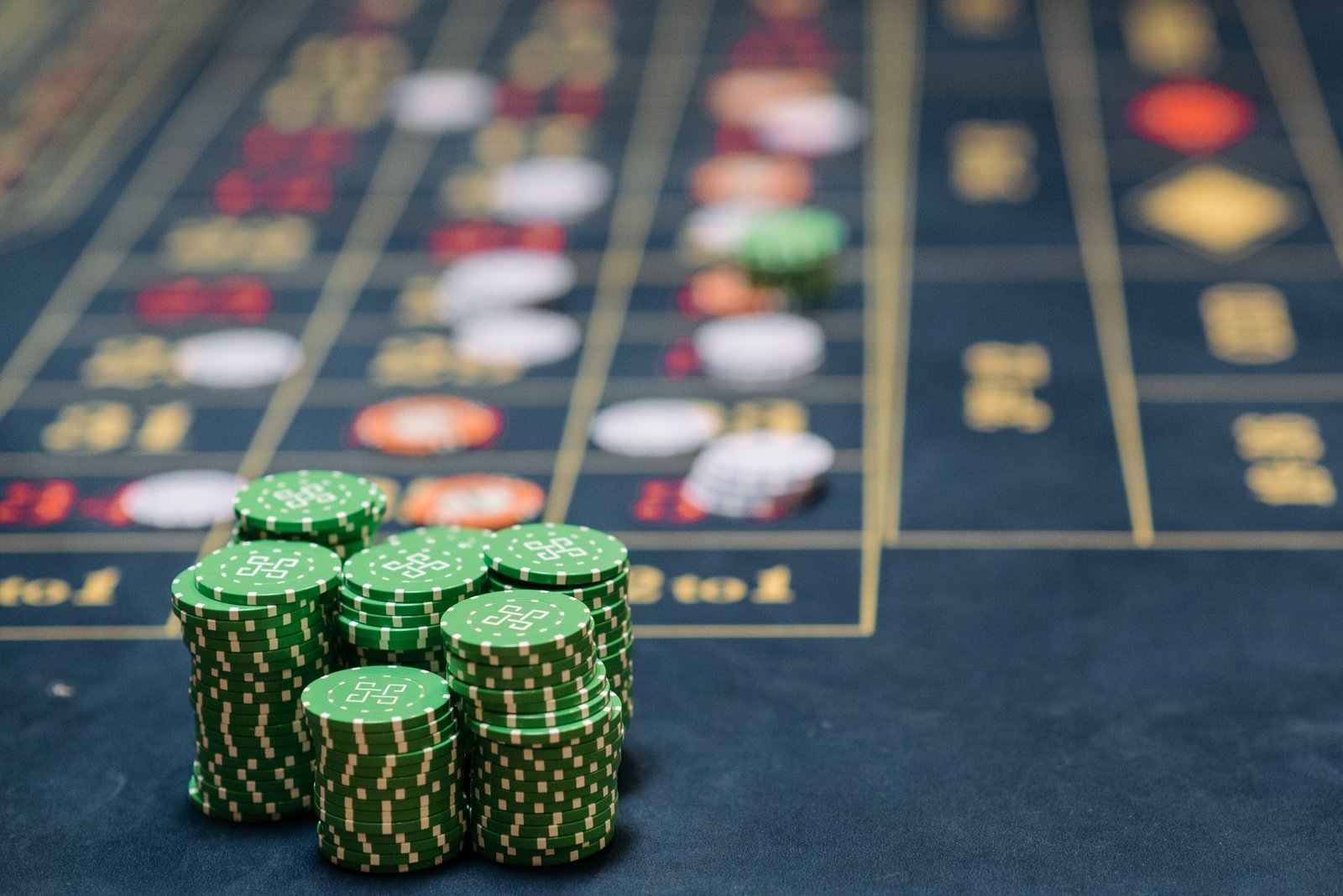
Roulette offers the cleanest classroom example of how a casino earns its hold without touching the ball. A standard European wheel holds 37 numbered pockets, spanning 1 through 36 plus a single green zero. If you bet $10 on a single number, your true odds of winning stand at 36 to 1. Nevertheless, the casino pays only 35 to 1 when your number hits.
That missing single unit creates a steady 2.70 percent advantage for the house on every spin. Put simply, for every $100 wagered across the layout, the operator expects to retain $2.70 over time. Meanwhile, American double-zero wheels add a 38th pocket while keeping payouts frozen at 35 to 1. That extra green slot nearly doubles the house advantage to 5.26 percent.
-
European single-zero wheels hold a 2.70 percent edge across standard inside and outside wagers.
-
American double-zero wheels jump to a 5.26 percent edge because two green pockets pay zero on even-money bets.
-
Triple-zero resort tables found across major floors in 2026 push that mathematical hold up to 7.69 percent.
Blackjack Rules and Skill-Driven Casino House Edge Math
Unlike roulette, blackjack pairs probability with real player decisions on every dealt hand. Under classic Vegas Strip rules featuring 3 to 2 blackjack payouts and dealer stands on soft 17, basic strategy drops the casino house edge math down to roughly 0.50 percent. That razor-thin margin makes traditional blackjack one of the fairest games on the floor. Still, the casino retains its structural advantage through one simple rule.
Players must act first and bust immediately whenever their hand exceeds twenty-one. Even if the dealer subsequently draws a bust card on the very same round, your lost wager stays in the tray. Moreover, small rule tweaks can quietly triple or quadruple the operator’s hold against unsuspecting guests. Always inspect the table felt before buying in.
-
Confirm that natural blackjacks pay 3 to 2 rather than 6 to 5, which adds 1.39 percent to the house edge.
-
Look for tables where the dealer stands on soft 17 instead of hitting, saving you roughly 0.22 percent.
-
Check whether doubling after splitting is permitted, as restricting this move costs another 0.14 percent.
Why Card Counting Shifts the Equation
Most casual players rely on intuition, turning a 0.50 percent mathematical disadvantage into a 2.00 percent bleed. Conversely, disciplined card counters track the ratio of remaining ten-value cards and aces inside the shoe. When high cards dominate the undealt deck, player blackjack frequency rises and the edge flips slightly positive. However, continuous shuffling machines and 2026 facial recognition systems make advantage play exceedingly tough in commercial pits.

Slot Volatility, RTP, and Hidden Hold Percentages
Slot machines hide their mathematical formulas behind dazzling animations, cascading reels, and bonus triggers. Regulators express slot math through Return to Player, or RTP, which represents the inverse of the house edge. A machine programmed with a 94 percent RTP carries a 6 percent house advantage over its lifecycle. Consequently, every $1,000 cycled through that terminal yields $60 in theoretical hold for the venue.
Never confuse high hit frequency with a low house edge on modern video slots. A machine can award frequent small line hits worth less than your spin cost while still draining your balance at an 8 percent hold rate.
Brick-and-mortar penny slots in 2026 routinely carry house edges between 7 percent and 12 percent, whereas higher-denomination dollar reels often sit closer to 4 percent. Furthermore, volatility dictates how bumpy that ride feels during a single afternoon session. High-volatility titles cluster their payouts into rare bonus rounds, creating steep dry spells between wins. Meanwhile, low-volatility games deliver steadier small returns while applying the exact same long-term hold.
Practical Scenarios: Comparing Three $500 Casino Sessions
Numbers make far more sense when measured against a realistic weekend bankroll. Imagine three friends each bring $500 to a resort and wager $10 per round for 300 total decisions. That equals $3,000 in total action cycled across the evening. Look at how sharply their expected losses diverge based strictly on game selection.
-
Playing basic strategy on a 3 to 2 blackjack table at a 0.50 percent edge results in an expected loss of just $15.
-
Spinning a European single-zero roulette wheel at a 2.70 percent edge leads to an expected cost of $81.
-
Choosing a resort penny slot carrying a 9 percent hold produces an expected drain of $270 over the same span.
Variance means the slot player could still hit a $1,200 bonus feature and walk away ahead of both table players. Yet if those three friends repeat that exact routine every weekend for a year, the math becomes inescapable. Disciplined table selection preserves thousands more in entertainment capital simply by avoiding high-hold games.
Actionable Ways to Outsmart Casino House Edge Math
You cannot eliminate the operator’s mathematical advantage without specialized advantage-play skills, yet you can shrink it dramatically. First, slow down your pace of play by choosing full live tables over rapid electronic terminals. Making 50 decisions per hour at a crowded blackjack table exposes far less money to the edge than spinning a slot 600 times per hour.
Second, always verify payout tables before placing a single chip on any felt or video screen. Skipping 6 to 5 blackjack and double-zero roulette immediately protects your bankroll from unnecessary friction. Ultimately, respecting casino house edge math lets you treat gambling as calculated entertainment rather than an expensive guessing game.